Source euro v oxygen sensor bung for Engine Repair, Exhaust Systems, and Noise Control
Find 20 verified listings for the euro v oxygen sensor bung suitable for engine repair, exhaust system maintenance, and noise reduction. Buyers can compare stainless steel and steel options with M18x1.5 threads from Chinese manufacturers offering ISO certification.
Key considerations
Products List


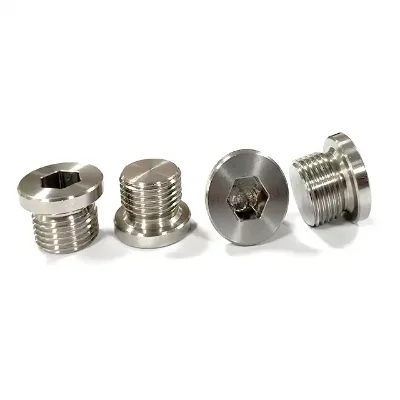


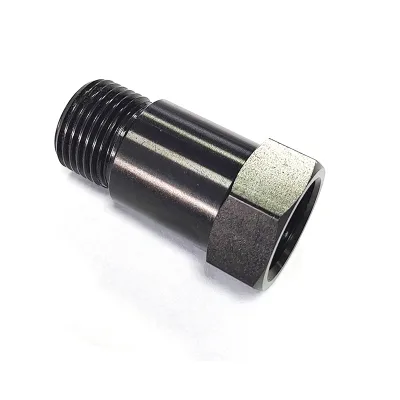


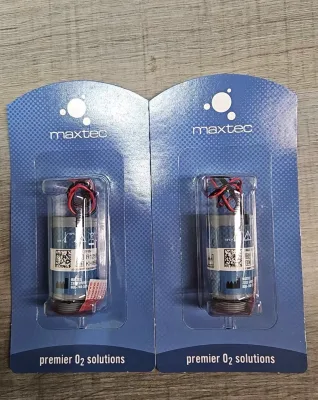
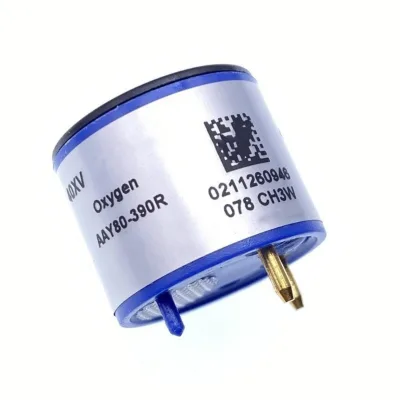
Comprehensive Sourcing Guide
Strategic Sourcing Guide for Euro V Oxygen Sensor Bungs
The global automotive aftermarket and original equipment manufacturing sectors face increasing pressure to maintain emission compliance while optimizing component costs. For buyers researching the core keyword "euro v oxygen sensor bung," the procurement landscape requires a nuanced understanding of technical interfaces, material integrity, and regulatory alignment. This guide synthesizes observed market data and industry standards to provide a disciplined framework for sourcing these critical exhaust system components. The focus remains on evidence-based evaluation, ensuring that procurement decisions are grounded in verifiable specifications rather than marketing assertions.
Technical Specifications and Dimensional Precision
The foundation of a successful procurement strategy for oxygen sensor bungs lies in the rigorous verification of dimensional specifications. In the observed market data, the thread specification "M18*1.5" appears with high frequency, indicating a dominant standard for this component class. However, buyers must exercise caution, as the data also references "M12X1.25" and general "M12, M18" designations. This variance suggests that while M18x1.5 is a prevalent standard, it is not universal across all vehicle models or manufacturers.
When evaluating potential suppliers, the primary technical check must confirm the thread pitch and diameter match the specific vehicle's exhaust port. The observed data lists "M18x1.5mm" and "M18*1.5" as standard product models, but these should be treated as observations of common inventory rather than guaranteed specifications for every unit. A mismatch in thread pitch, even by a fraction of a millimeter, can lead to sensor failure, exhaust leaks, and subsequent emission violations.
Furthermore, the head style is consistently observed as "Round" in the provided product attributes. This geometric feature is critical for the installation torque and the sealing surface. The component's body material is frequently cited as "Stainless Steel," "Steel," or "Aluminum," with some listings noting a combination of these materials. The choice of material directly impacts the component's resistance to thermal cycling and corrosion within the harsh exhaust environment. Buyers should verify that the material grade corresponds to the specific thermal loads of the engine system, particularly for Euro V applications where exhaust temperatures can be elevated.
Compliance and Certification Verification
Navigating the regulatory landscape for automotive components requires strict adherence to certification standards. The observed data explicitly mentions "ISO" certification in multiple entries, alongside references to "Euro I" discharge standards. While "Euro I" is listed, the core keyword focuses on "Euro V" compliance. This discrepancy highlights a critical procurement risk: suppliers may list historical standards or generic certifications that do not align with the specific regulatory requirements of the target market.
Buyers must not assume that a listed "ISO" certification automatically validates the component for Euro V emission systems. The certification status must be verified against the specific ISO standard relevant to automotive exhaust components, such as ISO 9001 for quality management or specific automotive industry standards for emissions hardware. The presence of "ISO" in the product attributes should be treated as a claim requiring independent verification through valid certificates of conformity.
Additionally, the "Discharge Standard: Euro I" observation serves as a reminder that emission standards are tiered. A component suitable for Euro I may not possess the necessary material properties or dimensional tolerances required for the stricter thermal and chemical demands of Euro V systems. Procurement teams must demand documentation that explicitly links the component to Euro V compliance, rather than relying on generic "ISO" or "Euro" labels. The absence of explicit Euro V certification in the provided data necessitates a proactive verification process where the buyer requests current test reports and compliance certificates from the supplier.
Cost Drivers and Pricing Dynamics
The pricing landscape for oxygen sensor bungs is influenced by a complex interplay of material costs, manufacturing processes, and order volumes. The observed price range spans from $0.40 to $1,000 USD, a variance that reflects differences in material quality, production scale, and packaging. The lower end of this spectrum likely corresponds to basic steel or aluminum bungs with minimal finishing, while the higher end may include specialized stainless steel grades, custom machining, or bulk packaging solutions.
Material composition is a primary cost driver. Listings indicating "Stainless Steel" generally command a premium over "Steel" or "Aluminum" due to the superior corrosion resistance and thermal stability required for exhaust applications. The finish process also impacts cost; observed attributes include "Zinc Coating," "Plain," and "No Coating." Zinc coating adds a layer of protection against rust but increases the manufacturing step count and material cost. Buyers must balance the initial purchase price against the total cost of ownership, considering the potential for premature failure and the cost of engine downtime if a lower-quality bung fails.
Order volume plays a significant role in unit pricing. The observed Minimum Order Quantity (MOQ) ranges from 1 to 1,000 units. Suppliers offering an MOQ of 10 pieces, as noted in the data, may cater to small-scale repair shops or prototyping needs, often at a higher per-unit cost. Conversely, buyers seeking to optimize costs for large-scale fleet maintenance or OEM production should target suppliers with higher MOQs, which typically unlock volume discounts. The "Single package size" of 8x9x3.5 cm and a weight of 26g suggest that logistics costs are relatively low per unit, but bulk shipping via "Carton + Wooden Pallet" or "Carton and Pallet" configurations can significantly reduce per-unit freight expenses for large orders.
Typical Applications and Vehicle Compatibility
Understanding the application scope of oxygen sensor bungs is essential for ensuring component compatibility. The observed data identifies the product as an "Oxygen Sensor Bung" or "Oxygen sensor bung," with a stated purpose of "replace/repair." The "Car model" is listed as "Universal Car," a term that requires careful interpretation. In the context of automotive parts, "universal" often implies compatibility with a wide range of vehicles sharing a common thread standard, such as the M18x1.5 observed in the data.
However, the "Euro V" designation in the core keyword implies a specific regulatory context. Euro V vehicles, produced roughly between 2009 and 2014 in many markets, utilize specific exhaust gas recirculation and sensor placement configurations. While the component may be physically compatible with various engine types, its functional performance must align with the sensor's ability to monitor exhaust gases accurately under Euro V operating conditions. The "Noise Source" attributes, such as "The Noise of Engine" and "Mechanical Noise," along with "Automobile Chassis Noise: The Brake Noise," suggest that these components are part of a broader system where acoustic performance and vibration damping are also relevant.
Buyers should verify that the "OE NO." (Original Equipment Number), such as the observed "JXSS00701A," matches the specific part number required for their target vehicle fleet. Relying solely on "Universal Car" claims without cross-referencing specific vehicle identification numbers (VINs) or engine codes can lead to procurement errors. The "Condition: New" attribute confirms that the market primarily deals in replacement parts, but the "Customization: Available" note indicates that some suppliers may offer tailored solutions for non-standard applications or specific OEM requirements.
Supplier Evaluation and Origin Analysis
Selecting the right supplier is a critical step in mitigating supply chain risks. The observed data indicates that the "Place of Origin" is predominantly "China," with specific mentions of "Shandong, China" and "Guangdong, China." These regions are known hubs for automotive component manufacturing, offering a robust ecosystem of suppliers. However, the concentration of origin in these areas necessitates a thorough due diligence process to ensure that the manufacturing facilities meet international quality standards.
Supplier evaluation should extend beyond the basic "Brand Name" or "Product Name." The "Quality: High-Quality" attribute is a subjective claim and must be substantiated by objective evidence. Buyers should request audit reports, factory certifications, and references from other international clients. The "Delivery time" of "3-7 Days" observed in the data suggests a responsive supply chain, but this lead time should be verified for the specific order volume and destination. Reliance on short lead times without a contingency plan can be risky if production bottlenecks occur.
The "Main Market" is listed as "North America," which implies that the suppliers are experienced in meeting the regulatory and quality expectations of that region. This is a positive indicator for buyers targeting similar markets, as it suggests familiarity with the necessary documentation and compliance protocols. However, buyers must still verify that the supplier's specific production lines are capable of meeting Euro V standards, as market experience does not guarantee product-specific compliance.
Quality Control and Long-Term Procurement
Implementing a robust quality control (QC) regime is essential for maintaining the integrity of the exhaust system. The "Finish" options, including "Zinc Coating" and "Plain," require specific inspection criteria. Visual inspection for coating uniformity and thickness is necessary to prevent corrosion, while dimensional checks must verify the thread pitch and head style against the M18x1.5 standard. The "Single gross weight" of 0.030 kg provides a baseline for weight-based QC checks, ensuring that the component is not under-filled or defective.
Long-term procurement considerations involve establishing a relationship with suppliers who can provide consistent quality over time. The "Customization: Available" attribute suggests that suppliers are flexible, but buyers should formalize these capabilities through clear specifications and quality agreements. Regular audits and sample testing should be part of the procurement cycle to ensure that the "High-Quality" claims remain valid.
Furthermore, the "Packing" methods, ranging from "Opp bag" to "Carton + Wooden Pallet," must be evaluated for their ability to protect the components during transit. Proper packaging prevents damage to the threads and the head style, which are critical for installation. Buyers should specify packaging requirements in their purchase orders to ensure that the components arrive in a condition suitable for immediate installation.
Conclusion
Sourcing Euro V oxygen sensor bungs requires a disciplined approach that balances technical precision, regulatory compliance, and cost efficiency. The observed market data provides a foundation for understanding common specifications like M18x1.5 threads and stainless steel materials, but it also highlights the need for rigorous verification of certifications and compatibility. By focusing on evidence-based evaluation, buyers can navigate the complexities of the global automotive supply chain and secure components that meet the stringent demands of Euro V emission systems. The path to successful procurement lies in continuous verification, clear communication with suppliers, and a commitment to quality that extends beyond the initial purchase.
FAQs
What thread specifications are common for oxygen sensor bungs?
The most common thread specification is M18*1.5, though M12X1.25 is also observed. Buyers must verify the exact pitch and diameter against their vehicle's exhaust port to prevent leaks and sensor failure.
Which materials are used for these exhaust components?
Materials include stainless steel, steel, and aluminum. Stainless steel offers superior corrosion resistance and thermal stability, which is critical for maintaining integrity in harsh exhaust environments.
Can suppliers provide customization for non-standard applications?
Yes, customization is available for specific OEM requirements or non-standard applications. Buyers should formalize these needs through clear specifications and quality agreements to ensure the final product meets their exact needs.
How do I verify Euro V compliance for this part?
Buyers must request specific documentation linking the component to Euro V standards rather than relying on generic ISO labels. Historical standards like Euro I do not guarantee the necessary thermal and chemical performance for Euro V systems.
What is the typical lead time for delivery?
The observed delivery time ranges from 3 to 7 days for standard orders. This lead time should be verified for specific order volumes and destinations to ensure it meets project timelines.
Which certifications should I look for in a supplier?
ISO certification is frequently listed, but it requires independent verification against specific automotive standards. Buyers should demand valid certificates of conformity to ensure the component meets international quality and safety requirements.